
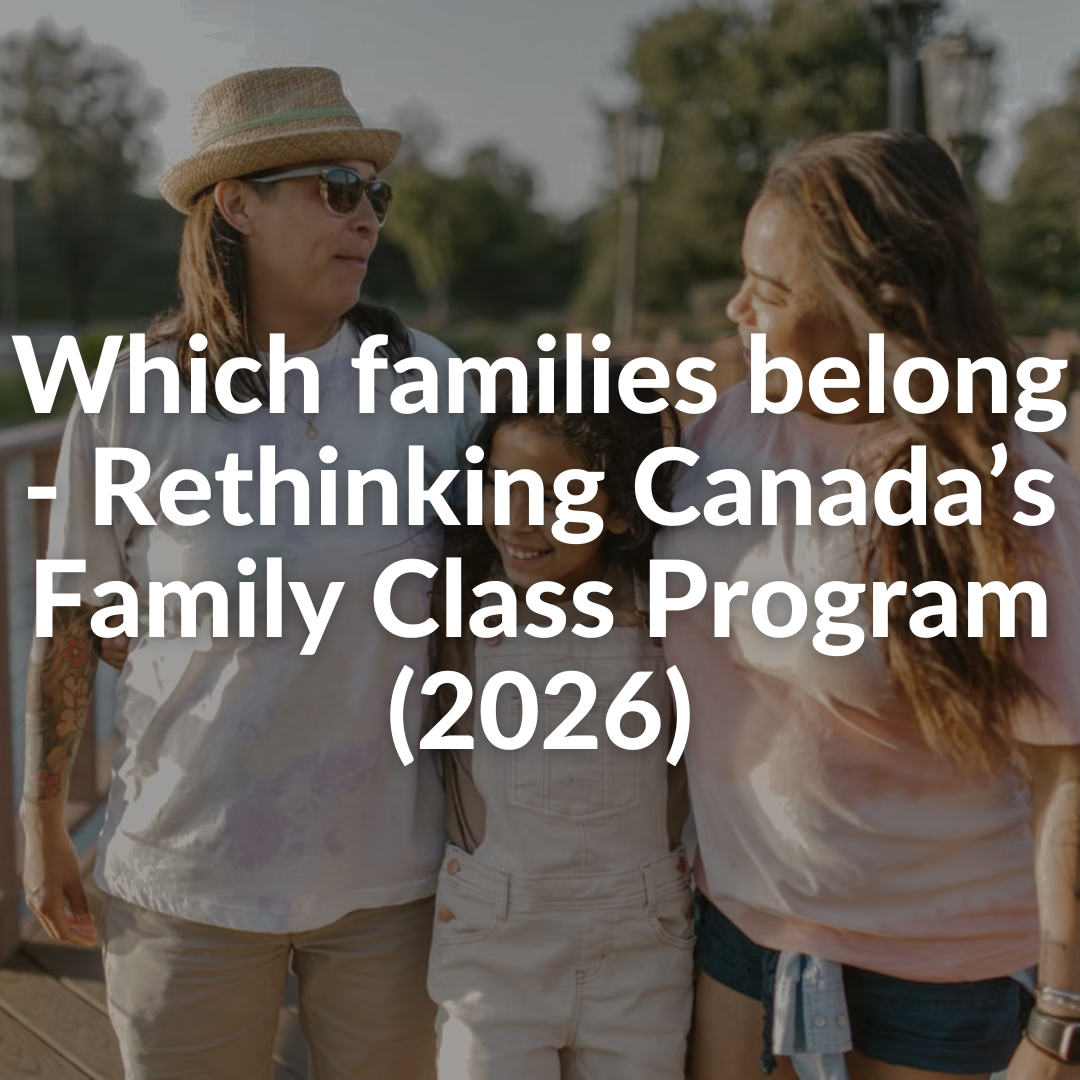
Family members make up roughly one-quarter of Canada’s annual permanent resident admissions, and governments regularly celebrate family reunification as a pillar of Canadian immigration policy. Yet, the Family Class Program still reflects a narrow, outdated understanding of what constitutes a family and continues to impose inconsistent, sometimes opaque barriers that prevent many migrant families from reuniting.
These limitations are increasingly at odds with evolving family structures in Canada and with the realities of transnational caregiving, multigenerational households and diverse intimate partnerships. They also interact with growing pressures on Canada’s migration system, including political concerns about system integrity, long processing times and fluctuating admission targets.
This brief argues that a more inclusive, coherent and consistent family reunification program is needed. Canada’s current legislative and administrative frameworks continue to privilege the economically self-sufficient, heterosexual, nuclear family model rooted in the 1976 Immigration Act. Meanwhile, migrants who depend on extended kin networks — for caregiving, emotional support and economic stability, among other things — often find no viable route to reunification. Program freezes, inconsistent intake levels and high evidentiary burdens further disrupt family life, especially for parents, grandparents and couples whose relationships do not fit bureaucratic expectations.
Canada’s historical approach to the Family Class has been shaped by three overlapping state agendas: nation-building, economic growth and border security. While these objectives remain politically influential, they also constrain policy-makers’ ability to adapt definitions and pathways to today’s social realities. Migrant families seeking reunification often face entrenched assumptions of a specific cultural model of intimacy and parenting that presumes fraud if the family structure doesn’t conform. This disproportionately impacts racialized, low-income families typically from the Global South. These limitations undermine the program’s stated purpose of enabling families to live together and thrive in Canada.
To modernize family reunification and better align it with contemporary family life, this brief makes four recommendations:
Canada’s demographic trends, including declining fertility and slower population growth, underscore the importance of migrant families to the country’s long-term social and economic health. Reforms that centre lived family dynamics and reduce unnecessary barriers would not only strengthen Canada’s humanitarian commitments but also better support the economic, emotional and social well-being of newcomers and their Canadian sponsors. A modernized family reunification program should reflect the simple principle that guides this brief: families, in their many forms, have a right to be together.
(text copied from original post)
Subscribe to get the latest posts sent to your email.
Please take this short survey to help improve the KM4S web site. The survey is anonymous. Thank you for your feedback! (click on the screen anywhere (or on the x in the top right corner) to remove this pop-up)